Most dev-tool founders are not marketers. They are engineers, product people, maybe a technical co-founder who became CEO by necessity. They built something because they found a real problem worth solving, not because they had a content calendar in mind.
And yet, at some point, the question comes up: "We need to start publishing." Maybe a competitor's blog is showing up in every search your users would type. Maybe someone on your team heard that "content is a compounding channel." Maybe you just feel the pressure of a thin blog and a busy product roadmap, and you are not sure how to close the gap. If you are new to developer marketing, the whole thing can feel opaque.
Here is the thing: you do not need a marketing degree, a journalism background, or a content agency to publish articles developers will actually read. What you need is a clear process you can follow consistently. This guide lays that out step by step.
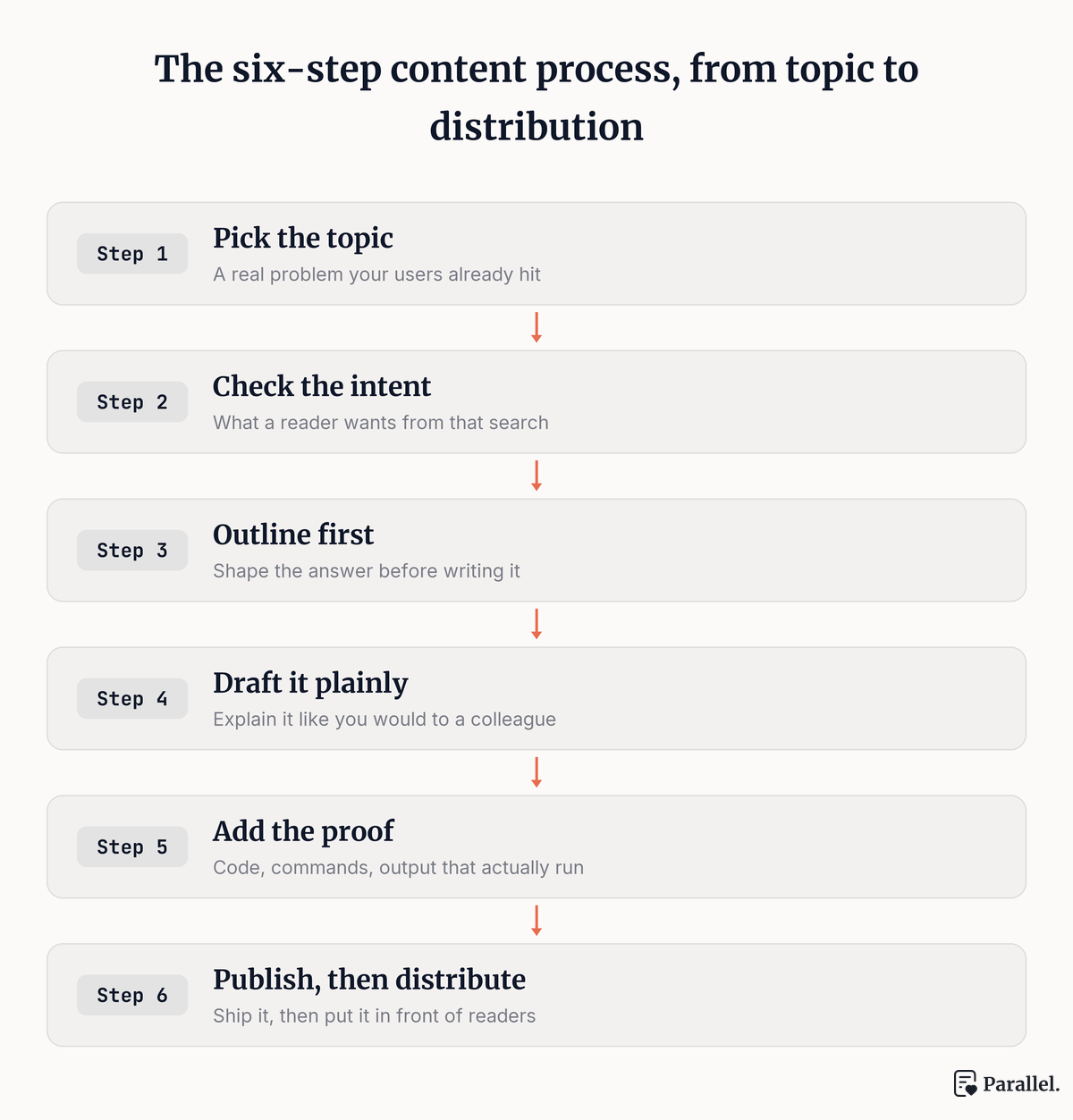
Figure 1: The six-step content process at a glance.
Why founders are better positioned than they think
There is a common misconception that content is fundamentally a creative job that requires specialized expertise. For certain kinds of content, that is true. But for technical blog posts aimed at developer audiences, the most valuable inputs are product knowledge and customer empathy, and founders tend to have both in abundance.
Developers read to learn and decide. They want tutorials that work, explanations that respect their time, and honest assessments of tradeoffs. They do not want polished marketing prose. In fact, content that sounds too polished is often a signal that the author does not deeply understand the thing they are writing about.
Your advantage as a founder is that you probably understand your product's use cases, edge cases, and the problems it solves better than any hired writer ever will. The challenge is translating that knowledge into content that is structured, scannable, and useful to a reader who does not share your context.
That is a learnable skill. And with the right process, it is a fast one.
Step 1: Start with what your customers actually ask
The most common mistake founders make when starting a content program is picking topics based on what sounds interesting or what a competitor is writing about. The better approach is to look at what your own users and prospects are already asking.
Go through your support threads, Slack or Discord community messages, sales call notes, and onboarding conversations. Write down every question that comes up more than once. Those are your first ten blog posts.
This works for two reasons. First, the content will be specific enough to rank and be discovered, because it matches the exact language developers use when searching. Second, you already know the answer, which means you are not starting from scratch. You are translating something you already know into a format that scales.
A few reliable starting points:
- "How do I..." questions from support or community channels. These become tutorials.
- "Why does..." questions from onboarding. These become concept explainers.
- "How does [your tool] compare to [competitor]" questions from sales calls. These become comparison posts.
- Changelog entries for significant feature releases. These become feature announcements.
If you are early-stage and do not yet have a rich support history to mine, look at the communities where your target users spend time: relevant subreddits, Discord servers, Stack Overflow tags. The questions they ask publicly are the same ones they are searching for answers to.
Step 2: Write a brief before you write anything else
The brief is the single highest-leverage step in the process. It takes fifteen minutes and saves hours.
A brief answers five questions before a single word of the post is written:
- What is the title or working topic? Be specific. "How to authenticate API requests with [your tool] in Node.js" is a brief. "Content about authentication" is not.
- Who is the reader, exactly? A junior backend engineer trying to ship their first integration? A senior developer evaluating your tool against an alternative? Know who you are writing for before you start.
- What does the reader know when they arrive? Set a baseline. If you assume too much, you lose newer developers. If you assume too little, you lose senior ones.
- What should the reader be able to do when they finish? This is the outcome. It should be concrete and achievable.
- What is the one thing they should take away if they only remember one thing? This is the core message. If you cannot answer this, the topic is probably too broad.
Writing the brief forces you to figure out whether you actually have something worth saying before you invest time saying it. It also makes the writing itself much faster, because you are filling in a structure rather than figuring out one as you go.
Step 3: Structure the post before you write it
Founders often approach writing the way they approach coding: sit down, start at the top, and write until you reach the end. That works fine for a commit message. It does not work well for a 1,500-word tutorial.
Instead, outline first. A simple outline for a technical tutorial looks like this:
- Opening (2–3 paragraphs): Name the problem the reader is facing. Say what the post covers. Establish why it matters.
- Prerequisites / Setup (if needed): List what the reader needs before they start. Keep this brief.
- Step-by-step content: Each step gets its own heading. Lead with the instruction, follow with the explanation. Not the other way around.
- Common errors or edge cases: What goes wrong? How do you fix it? This section builds trust.
- Conclusion: Recap what the reader just accomplished and where to go next.
Once you have the outline, you are not writing a post. You are filling in boxes. That is much less intimidating, and it produces content that is more scannable for readers.
For concept explainers or comparison posts, the structure is different, but the approach is the same: outline the sections before you write the prose. The structure is the scaffolding; the writing is the filling.
Step 4: Write like you would explain it to a smart colleague
The biggest barrier founders report when it comes to writing is the fear of sounding unsophisticated. They overthink the prose, reach for formal language, and end up with something that reads like a press release.
Here is the frame that fixes it: write the way you would explain something to a smart colleague who is new to your product. Direct, specific, and respectful of their intelligence without assuming shared context.
A few principles that hold across almost every technical post:
- Use the second person. "You" instead of "the user" or "one." It keeps the writing direct and reader-focused.
- Put instructions before explanations. Tell the reader what to do, then explain why. Developers scan step-by-step content; they do not read it sequentially.
- Be specific about versions and environments. "This works on Node.js v20+" is useful. "This works on modern Node.js" is not.
- Show, do not just tell. If you are explaining a concept, give an example. If you are walking through a process, show what the output looks like.
- Keep paragraphs short. Long blocks of prose are harder to scan and more likely to be skipped. Three to four sentences is usually enough before a break.
One useful technique: talk through the topic out loud first, either by recording yourself or by telling someone the explanation verbally, then use that as your rough draft. The spoken version is almost always clearer and less formal than what people write directly.
Step 5: Handle quality without slowing down
Quality control for technical content has two distinct concerns that are easy to conflate: technical accuracy and editorial polish. They require different reviewers and they are not equally urgent.
Technical accuracy is the non-negotiable one. If your tutorial has a wrong flag, a deprecated API call, or a code example that errors out in the environment you described, it will erode trust with the exact audience you need to build it with. Developers will not assume they made a mistake; they will assume your content is unreliable.
Before anything is published, someone needs to run the code, verify the commands, and check that the claims match the actual product. In most early-stage teams, that is an engineer, probably the one who knows the feature best.
Editorial polish matters, but it matters less. An article with a slightly rough sentence or a missing comma is forgiven quickly if the content is accurate and useful. An article with a working code example that does not work is not forgiven. Protect the technical review above everything else; polish can always be improved in a second pass.
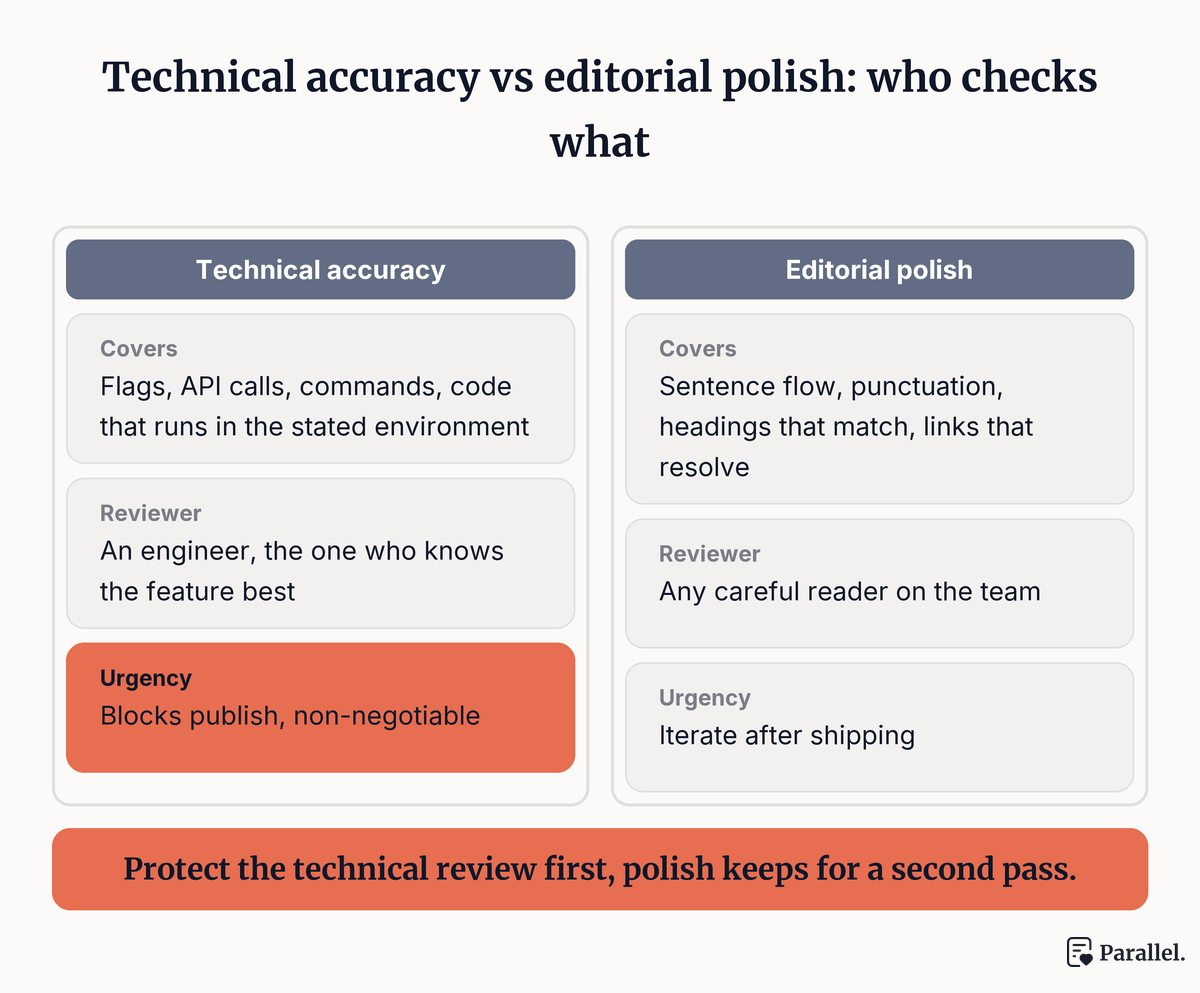
Figure 2: Two distinct quality concerns, one clearly higher priority.
A lightweight pre-publish checklist helps here:
- All code examples run without errors in the described environment
- Product behavior matches the current version
- No claims contradict current documentation
- Headings accurately describe what follows
- External links resolve
That is enough to ship something trustworthy. Everything else is polish you can iterate toward.
Step 6: Distribute it before you move on
Publishing is not the end of the process. It is the beginning of the distribution step.
For a dev-tool company early in its growth, the highest-value developer marketing channels are targeted and community-driven, not broadcast. A few things that work consistently:
- Seed it in the communities where the topic is already being discussed. If you wrote a tutorial on deploying [your tool] on Kubernetes, find the Kubernetes Discord channels and Reddit threads where that question comes up organically. Post the article as a contribution to an ongoing conversation, not as a promotional drop.
- Share it with your existing users. Your current users are the audience most likely to read it, share it with a colleague, or validate it with a comment. A simple email or in-app message pointing to new content keeps them engaged and gives the post early traction signals.
- Make sure the SEO basics are covered. A relevant title tag, a meta description, proper heading structure, and internal links to related documentation or existing posts. You do not need to be an SEO expert; you need to not skip the fundamentals. Most publishing platforms handle the technical side; you just need to fill in the fields.
The goal of distribution at this stage is not massive reach. It is getting the post in front of people who will find it genuinely useful, so the organic signals (reads, shares, links) start to accumulate.
The bottleneck most founders hit: time
Everything above is doable by a non-marketing founder. The process is learnable, the writing is improvable, and the distribution is achievable with a small amount of consistency.
What breaks down in practice is time. Between building the product, talking to customers, and everything else that competes for attention in an early-stage company, sitting down to write a 1,500-word tutorial is the task that gets deferred indefinitely. Building a content ops system (a repeatable workflow for briefing, drafting, reviewing, and publishin) is what separates teams that ship consistently from those that publish in bursts and then go quiet for months.
This is the problem Parallel Content was built to solve. The platform indexes your existing product documentation, website, and brand guidelines, then generates technically grounded, publish-ready drafts based on the topics you provide. You do not need to write detailed briefs or onboard the tool to your product context through a series of calls; it learns your product by reading what you have already written. For teams who want an additional layer of confidence, an optional Expert Review step adds a named subject-matter expert to verify technical accuracy before publishing.
The output is not generic AI content. It is content that reflects how your product actually works, written in your voice, grounded in what you have documented. You can try it for free without a credit card and see what a draft grounded in your actual product looks like.
What consistency compounds into
One good blog post does not build a content program. But one good post a month, published consistently, with genuine care for whether it helps the reader, starts to compound in ways that are hard to achieve with any other channel.
Tutorials and guides that solve real problems continue to drive search traffic for months or years after they are published. Articles that show up in the right communities build the kind of brand awareness that money cannot easily buy. Content that earns citations from AI assistants puts your product in front of developers before they have even formed a preference.
You do not need a marketing team to get started. You need a process, a clear point of view on what your users need to know, and the discipline to ship something useful on a regular cadence. Every founder who has built a technical audience started with a single post they were probably not confident about.
Start there. Improve from there. The compounding takes care of the rest.